Anthropic
Updates from Anthropic News, Research, Claude Blog, X, and YouTube.
Tracked Sources
Related Templates
Tracked Sources
Related Templates
Latest Updates
 Anthropic Research·2d ago
Building strong safety evaluations
Recommendations for designing, running, and reporting safety evaluations, based on our own experiences.

 Claude Blog·2d ago
Building always-on agents
Always-on agents run indefinitely, deciding how and when to act across many sessions. This guide walks through their core primitives and how they fit together.
 Claude Blog·2d ago
The Claude Tag guide for startups
Which Slack channels to tag Claude in first: use cases, starter instructions, and a rollout checklist from eight startups using Claude Tag.
Introducing Claude Meetings
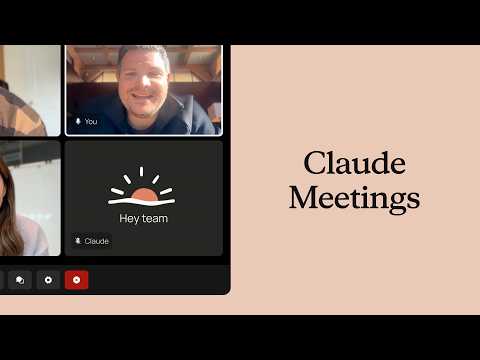
Introducing Claude Meetings: add Claude to your team's video call and it builds docs, whiteboards, and other artifacts with you while you're still talking. Claude joins as a visible participant. Ask it a question out loud or in chat, or have it start a doc. Your team can see what it's building and correct it as it takes shape. Claude takes the notes, too. After the call, the notes, action items, transcript, and anything Claude built are on the meeting's page in Claude. Claude Meetings is starting to roll out in beta on Team and Enterprise plans, starting with Google Meet, with support for other video conferencing platforms coming soon. Learn more here: https://claude.com/resources/articles/claude-meetings
Building the Claude API for the Frontier
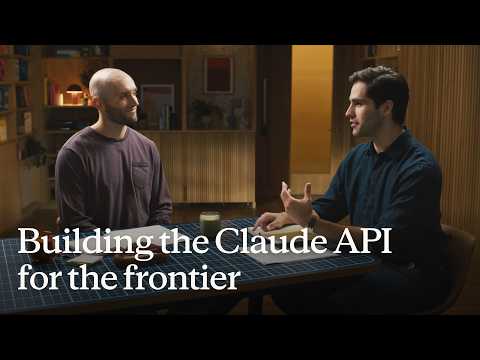
Every Claude launch puts the spotlight on the model, but just as much work goes into making sure the API evolves with it. That means adding new controls, retiring outdated ones, and helping developers rethink how they build with each new release. Jake Dejno (Member of Technical Staff, Claude Platform) and Lucca Siaudzionis (Member of Technical Staff, Platform Intelligence) discuss how research and customer requests shape what ships, best practices for changing effort mid-conversation without breaking prompt caching, and how Mythos and Fable use the same model weights with different safeguards.** 0:00 - Intro 0:15 - How the Messages API works 1:40 - Deciding what features to release 4:15 - Handling model versioning and migrations 8:15 - Best practices for managing cost 11:22 - Balancing access and safety with Mythos and Fable 14:41 - What’s next for the API Learn more about the Claude Platform: https://claude.com/platform/api Follow ClaudeDevs on X for product updates and best practices from the Claude Platform team: https://x.com/ClaudeDevs *Claude Managed Agents and changing effort mid-conversation are in beta. **Claude Mythos access is through the Cyber Verification Program.
When to use every Claude model
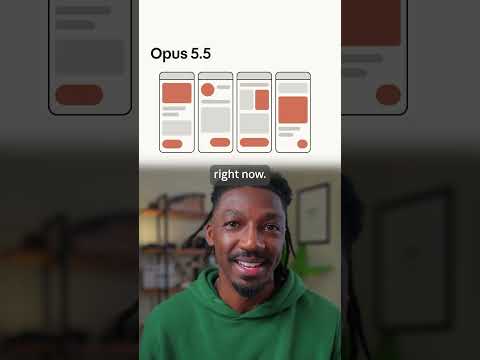
Try matching the Claude model to the scale of the work. • Opus 5.5 for planning and building full features • Fable 5.2 for the most ambitious, open-ended technical work • Sonnet 5.5 for everyday work like fixing a bug or drafting a doc • Haiku 5.5 for the smaller tasks you do again and again
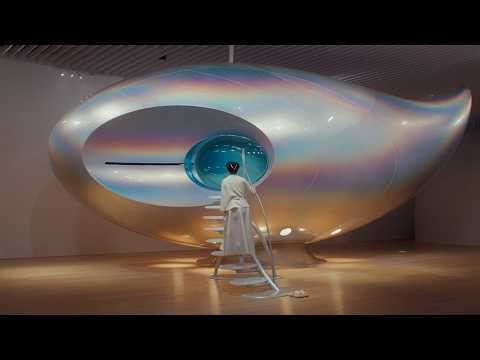
Mariko Mori's world of radiant light
Mariko Mori’s exploration of technology as a means of creative expression has pushed the boundaries of art for more than three decades. For her retrospective exhibition Mariko Mori: All That Shines, she used Claude to write code for a computer-generated animation, which was presented as a new video installation. On a seven-meter-wide screen in the final gallery, a horizon parts and opens onto a world of radiant light. Filmed in Miyakojima and Roppongi, Japan Mariko Mori: All That Shines October 31, 2026–March 28, 2027 Mori Art Museum Featured works: 0:01:18 Shrine 2025 0:01:20 Wave UFO 1999-2002 0:01:25 Unity Drawing X 2025 0:01:29 All That Shines 2026 (Commissioned and Produced by: Mori Art Museum) Installation view: Mariko Mori: All That Shines, Mori Art Museum, Tokyo, 2026–2027 Shrine 2025 Courtesy: SCAI THE BATHHOUSE, Tokyo; Sean Kelly, New York Production Support: Izutsu Shouzokuten, Inc. Installation view: Mariko Mori: All That Shines, Mori Art Museum, Tokyo, 2026–2027 Wave UFO 1999-2002 Installation view: Mariko Mori: All That Shines, Mori Art Museum, Tokyo, 2026–2027 Unity Drawing 2025 Installation view: Mariko Mori: All That Shines, Mori Art Museum, Tokyo, 2026–2027 All That Shines 2026 Collection: Faou Foundation, New York Installation view: Mariko Mori: All That Shines, Mori Art Museum, Tokyo, 2026–2027
 Claude Blog·3d ago
Operate Claude Managed Agents inside your security perimeter
Introducing self-hosted Claude Managed Agents in private beta. Now you can run agents in your own environment, whether that’s in your own cloud or on-premise.
 Claude Blog·3d ago
J. Crew brings its signature approach to styling to life with Claude
J.Crew’s new Style Advisor uses Claude to help customers shop JCrew.com by complete outfit, drawing on looks created by J.Crew’s own stylists.
 Claude Blog·3d ago
Introducing Claude for Manufacturing
Claude for Manufacturing drafts quotes, quality reports, and supplier requests from your plant’s own records, for your team to review and approve.
 Claude Blog·3d ago
Introducing Claude Meetings
Add Claude to your video calls to take notes, answer questions, and build docs and whiteboards while your team talks.
 Claude Blog·3d ago
Using Claude Opus 5.5 as your daily driver for knowledge work
Here's Opus 5.5 compares with Anthropic's other models for daily work.
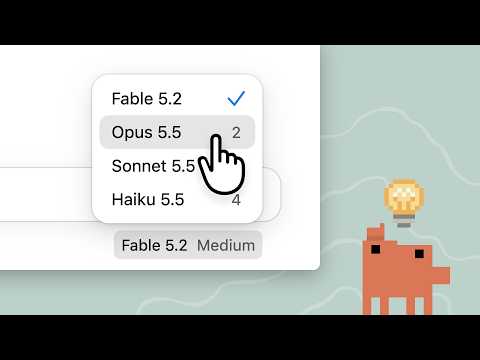
Fable 5.2 or Opus? When to use each model in Claude Code
Claude Fable 5.2 is out. With several models to choose from, learn when to start on Opus 5.5, when to move up to Fable 5.2 or down to Sonnet 5.5 or Haiku 5.5, and how to split one job across models. Availability and usage limits vary by plan. Guide to measuring each model on your own tasks: https://claude.dev/blog/which-claude-model-should-you-build-with/ Chapters 0:00 Intro 0:12 Complex coding and knowledge work 0:45 Ambitious, open-ended technical work 1:28 Well-scoped work at lower cost 2:19 Split one job across models 2:59 Where each model fits
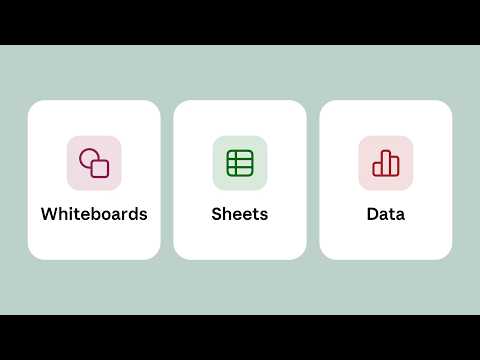
Introducing Claude Whiteboards, Sheets, and Data
Claude Whiteboards and Claude Sheets are in beta, and Claude Dashboards is now generally available as Claude Data. Brainstorm on whiteboards, build sheets, and share data directly in Claude, with your team working alongside you. Claude Whiteboards: Talk through a messy plan out loud, and Claude turns it into a board with a timeline, owners, and dates that your team can work on in real time. Drag a box around any part of the board to ask Claude about it. Claude Sheets: Ask for a campaign tracker or a hiring budget, and Claude builds a spreadsheet with tabs, formulas, formatting, and drop-downs, outlining each edit so you can track changes. Share it, and you, your team, and Claude work on it together. Claude Data: Your data team certifies the queries everyone should use, and Claude helps you draft data stories or narrated videos from your metrics. With live sharing, colleagues see up-to-date numbers when they open a shared dashboard. Read the announcement: https://claude.com/resources/articles/sheets-whiteboards-data
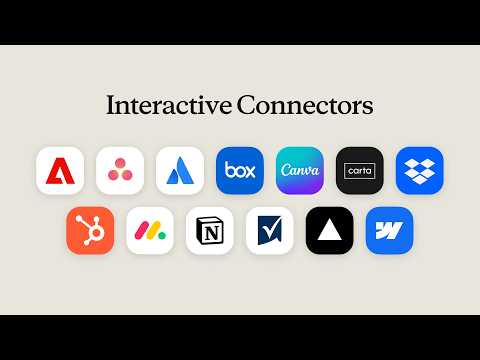
Your apps have moved into Claude
With interactive connectors, you can now open the full version of a tool inside Claude. Work in Adobe, Atlassian, and Box beside your conversation. Make changes yourself, or ask Claude to make them with you. In this video, Claude adds a summary to a launch plan in Confluence, applies a dither effect to a photo in Adobe, and checks a floor plan against a design standard in Box, then saves the revision as a new file. Rolling out on web and desktop. Learn more: https://claude.com/resources/articles/more-ways-to-work-with-claude-sheets-whiteboards-and-interactive-connectors
 Anthropic News·5d ago
Anthropic launches roadshow for proposed initial public offering
Today Anthropic, PBC launched the roadshow for its proposed initial public offering of its Class A common stock.
 Claude Blog·5d ago
Your apps can now open in Claude, and Claude can work in them
Interactive connectors can now open beside your chat or full screen, so you and Claude can work in the same tool, where the connector supports it.
 Claude Blog·5d ago
How Curative is building a national provider network with agents on Claude
How Curative built a hierarchy of agents on Claude to sign provider contracts about 50 times faster than its team did in 2025.
 Claude Blog·5d ago
More ways to work with Claude: Sheets, Whiteboards, and Interactive Connectors
Anthropic introduces Claude Sheets and Claude Whiteboards, and an upgrade to interactive connectors.
Meet Claude Fable 5.2
Fable 5.2 is designed to tackle the most daunting technical challenges. It’s a capable collaborator on ambitious projects in many different fields, and shows improvements in areas like coding, reasoning, and vision. Fable 5.2 is best for the most ambitious, open-ended technical work. For most coding and knowledge tasks, we recommend starting with Opus 5.5. Available today on Pro, Max, Team, and Enterprise plans. Learn more: https://www.anthropic.com/claude-fable-and-mythos-5-2
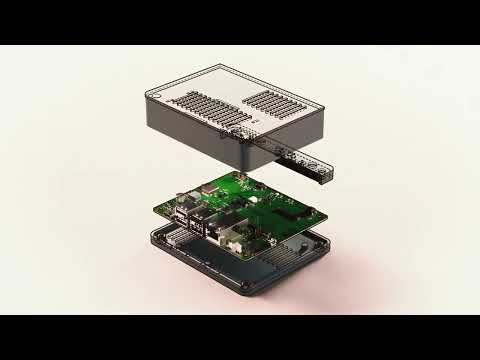
Claude Fable 5.2 designs a working voice-assistant hub
Claude Fable 5.2 designed this voice-assistant hub from a one-paragraph prompt. It laid out the circuit board, modeled the case in CAD and wrote the firmware. Diode Computers then built the board straight from Claude’s design files. It’s an early prototype, one of three devices Claude designed for the project. Anthropic has a commercial relationship with Diode. Learn more: https://www.anthropic.com/claude-fable-and-mythos-5-2
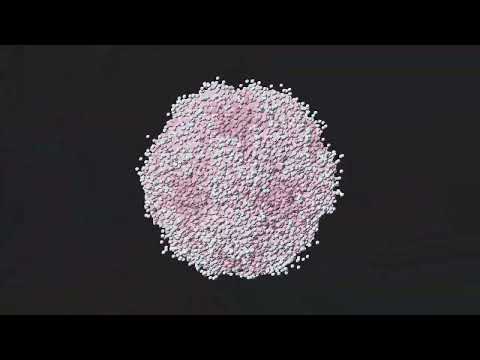
Claude Mythos 5.2 predicts the structure of a therapy capsid
Claude Mythos 5.2 predicted the structure of a whole AAV capsid, the protein shell used to deliver gene therapies. The capsid is 60 copies of one protein chain. Claude wrote code that runs open-source folding models on overlapping groups of five neighboring chains, then uses the capsid’s symmetry to stitch all 60 together. On AAV2, its prediction landed within about the width of an atom of the experimental structure. Learn more: https://www.anthropic.com/claude-fable-and-mythos-5-2
 Anthropic Research·6d ago
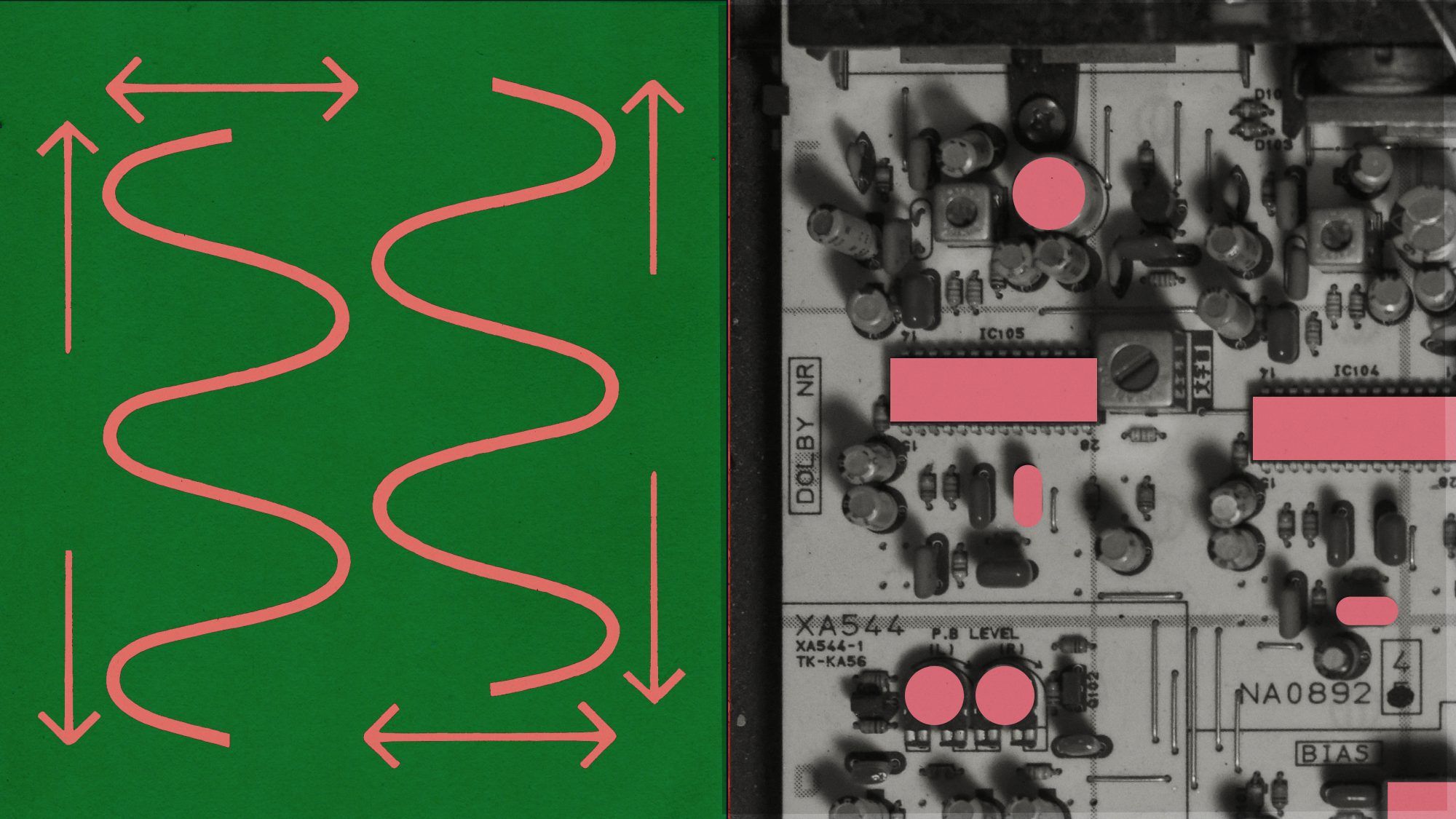
Testing Claude on real-world electronics design
We asked Claude to design three electronic devices: a speakerphone, a voice-assistant hub, and a handheld virtual pet. The prototypes worked without any fixes to their circuitry.
 Anthropic Research·Nov 6
Teaching AI to build scientific models
AI for Science grantees Jakob Macke, Daniel Gedon, and Stefan Wahl on how AI is starting to change how scientific models are built and interpreted.
 Anthropic Research·Nov 6
The components of agent memory
For Claude to learn from experience, it has to decide what’s worth remembering before it knows what’s next. Here’s how “dreaming” helps it organize memory and correct mistakes.
 Anthropic Research·Nov 5
AI for scientific discovery: How researchers use Claude
We analyzed 207,000 research sessions to learn how Claude is used in science, why some tasks get more use than others, and how AI could speed up discovery.
 Anthropic Research·Nov 4
Investigating vault particles with Claude
We’re sharing another finding from Anthropic’s biology research lab: the first 3D structure of a vault particle found in prokaryotic cells.
 Anthropic Research·Nov 2
Progress on provable inference for large language models
Sharing progress on a powerful type of cryptographic proof known as a zkSNARK, which is uniquely fit for provable inference.
 Anthropic News·Oct 28
AI for Science expands to foundations and research institutions
We’re highlighting 20 scientific foundations, institutions, and research groups from around the world that we’ve partnered with in an expansion of our AI for Science program.
 Anthropic News·Oct 27
Expanding our partnership with GSA to bring Claude to all levels of government
Anthropic is an AI safety and research company that's working to build reliable, interpretable, and steerable AI systems.
Get this as a briefing
Daigest collects updates from these sources
and delivers an AI-curated briefing to your inbox daily.