AX
Enterprise AI transformation strategies and adoption insights from Bernard Marr, Emerj, Enterprise AI Innovators, AI Realized, MIT Sloan, Technovation, and CXOTalk.
Tracked Sources
Bernard Marr
AI in Business
Enterprise AI Innovators

AI Realized
Me, Myself, and AI
Metis Strategy
CXOTalk
Related Templates
Tracked Sources
Bernard Marr
AI in Business
Enterprise AI Innovators
AI Realized
Me, Myself, and AI
Metis Strategy
CXOTalk
Related Templates
Latest Updates

What is Digital Sovereignty (with AI and Zoho)?
Digital sovereignty asks how much control a company holds over the digital tools, data, and AI that run its business, and whether someone else can pull the plug. Raju Vegesna, Chief Evangelist at Zoho, explains why sovereignty is a spectrum rather than a yes-or-no state, how AI creates a new exposure through knowledge residency, and how leaders can decide what to own, what to control, and where they need a plan B. ✅ You'll discover: ✅ Why digital sovereignty is broader than data sovereignty: the tool plus the data plus the control ✅ Why no company is 100% sovereign, and how to find the place on the spectrum your business is comfortable with ✅ Why every mission-critical system you don't control needs a plan B, as with an online retailer that depends on one or two payment vendors ✅ What customers define in a sovereign deployment: who administers the system, who controls the data, and who owns the encryption keys ✅ Why data residency rules don't cover knowledge residency, and why that is one reason on-premise is coming back ✅ What to review before connecting business data to public AI models, and why MCP is free while the models are not ✅ Why more power-efficient models running at the edge can let a business keep its intellectual property ✅ A test for any product or service: do you own or control its most expensive or most important part, and if not, do you have a plan B? ⏱️ TIMESTAMPS 0:00 Introduction 0:17 Digital sovereignty covers tools, data, and control 2:32 Sovereignty is a spectrum, not a binary 3:32 Customers define control in a sovereign cloud 4:46 Independence from vendors and investors 7:35 Control of critical technology decides who leads 9:15 Data stays, but knowledge leaves the room 11:16 Public AI models can expose your IP 13:05 Owned models and edge AI preserve sovereignty 15:59 AI raises the stakes for sovereignty 17:17 Owning the stack enables local control 19:45 Sovereignty is a chain of decisions CXOTalk streams live with audience questions. Join us live and ask the guests your own questions: https://www.cxotalk.com/subscribe Subscribe for weekly conversations with leading business and technology leaders. Get the CXOTalk newsletter: https://newsletter.cxotalk.com Show notes, transcript, and summary: https://www.cxotalk.com/episode/what-is-digital-sovereignty Episode 938 | Recorded October 15, 2026 #CXOTalk #DigitalSovereignty #Zoho #DataSovereignty #SovereignCloud #AI #EnterpriseAI #EdgeAI #CIO #Leadership
 AI Realized Podcast·2d ago
#52 The Digital Shelf Just Shrunk to Three Products. Will Yours Make the Cut? w/ Anna Luo
AI is changing how customers discover, evaluate, and buy products. On AI Realized, Anna Luo introduces the AI Commerce Innovators Circle and explains why agentic commerce is far more than another digital channel. Discover how personal AI agents could reshape shopping, why product-level context determines recommendations, and how brands must move beyond AI visibility to measurable sales. Anna also explores the critical balance between automation, privacy, and human judgment. The future of commerce starts with being recommended.
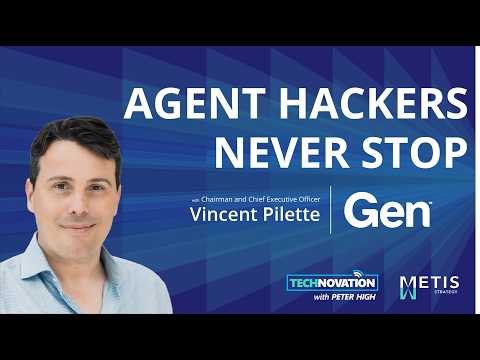
Agent Hackers Never Stop: Vincent Pilette on AI Threats and Digital Freedom | Technovation 1132
AI-powered "agent hackers" work continuously, exploit known vulnerabilities at scale, and can move money or make purchases on a consumer's behalf before anyone notices. Vincent Pilette, CEO of Gen Digital, explains how the company behind Norton, LifeLock, and Avast is responding: platformizing its stack, acquiring MoneyLion to extend from protection into financial wellness, and building Norton Genie as a security agent that filters what autonomous AI agents are allowed to do. Pilette traces Gen's evolution from point products to a membership model (Norton 360 reached 65% install-base adoption within 12–18 months) and addresses the engagement paradox at the heart of consumer security: the best outcome is silence, which makes the product nearly invisible by design. 🎧 An audio-only version of this interview is available as episode 1132 of Metis Strategy’s podcast, #Technovation with Peter High. 🌍 Learn more: https://www.metisstrategy.com/interview/vincent-pilette/ 📱 Follow us on social: 🔹 LinkedIn: https://www.linkedin.com/company/metis-strategy/ 🔹 Twitter/X: https://twitter.com/MetisStrategy 🔹 Facebook: https://www.facebook.com/technovationpodcast/ 🔹 Instagram: https://www.instagram.com/technovationwithpeterhigh/
 AI in Business Podcast·3d ago
How to Choose a Compute Platform Your Products Won't Outgrow - with Kyle Larson of IDEMIA
As AI accelerates software development, the hardware that software runs on is still often built on a slower, separate track, and the gap shows up in what customers receive. In this episode, Kyle Larson, VP of AI Enablement and Cloud Services at IDEMIA, examines why hardware and software now need to be planned and delivered as one product. He covers how to decide what runs on the device versus in the cloud, why developer tools and simulation need to be in place before physical prototypes arrive, and how to evaluate a long-term compute platform by the ecosystem and supplier roadmap around it. This episode is sponsored by MIPS. Learn how consultants are winning business with evidence-based AI ROI, and building long-term capabilities instead of chasing short-term gains, download our free PDF report, "3 Keys to Thriving in the Coming Era of Automation" at emerj.com/cok1
 AI in Business Podcast·5d ago
What Leaders Should Scope Before Investing in an AI Model - with Melissa Ramey of Salesforce
Choosing an AI model without defining the task can leave organizations paying for capabilities they do not need or relying on tools that cannot handle the work. In this episode, Melissa Ramey, Director, AI Transformation – Data Insights and User Experience at Salesforce, joins Emerj's Yolandi de Weerdt to examine how leaders can evaluate models against the work their teams need done. She discusses testing models on everyday tasks, involving employees in workflow assessment, and revisiting performance as requirements change. Learn the exact strategies we use to help leading AI brands and startups connect with their ideal enterprise AI buyers, visit: emerj.com/AD1

Deloitte Board Member on AI: What Works and What Doesn't
CEOs and boards face hard choices about AI: what to fund, how to measure it, when to stop, and how to govern agents that act on their own. China Widener, Vice Chair and US Technology, Media, and Telecommunications Industry Leader at Deloitte, has spent months talking with CEOs about AI's payoff. In this CXOTalk episode, she explains why making existing work faster does not create value on its own, and what leaders should change instead. You'll discover: ✅ Why boards should fund both near-term returns and long-term capability, and agree on what stopping a project looks like ✅ A simple test for any AI metric, token targets included: is this measure in service to your goal? ✅ Why pilots not designed for scale from the start are hard to convert into enterprise solutions, and why starting small is not the same thing as thinking small ✅ Why the people who oversee AI agents need real skill, as CEOs have begun to recognize over the past year ✅ Why governance and security must be designed together with the process, at the same pace as agent autonomy ✅ Why there is no single first AI bet for a middle-market company, and why one without heavy cost pressure might lean into growth ✅ How to weigh security against access, including the blast radius of a failure and the risks of shadow AI ✅ Why stopping early-career hiring leaves a company, once today's experts retire, without the people to govern the agents it builds ⏱️ TIMESTAMPS 0:00 Introduction 0:26 Faster processes alone do not create value 4:53 Lead with the business problem 8:15 Boards need both returns and capability 11:16 Starting small is not thinking small 14:03 Governance must keep pace with agents 19:22 Humans stay central as culture shifts 23:05 Business and technology strategy are inseparable 28:44 Start with the goal, not the tech 38:34 First bets and why transformation is hard 44:51 Build security into the design 50:15 Invest in the people who oversee AI CXOTalk streams live with audience questions. Join us live and ask the guests your own questions: https://www.cxotalk.com/subscribe Show notes, transcript, and summary: https://www.cxotalk.com/episode/deloitte-vice-chair-the-hardest-ai-decisions-facing-ceos Episode 937 | Recorded November 6, 2026 #CXOTalk #AI #AIStrategy #EnterpriseAI #Deloitte #AIGovernance #CEO #BoardOfDirectors #AIInvestment #Leadership
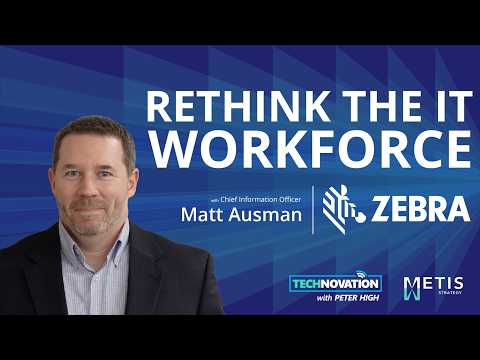
Matt Ausman, CIO of Zebra Technologies, on AI Agents and the Future of IT | Technovation 1131
How do CIOs prepare for a future where employees, service providers, and AI agents work side by side? In this episode of Technovation, Peter High speaks with Matt Ausman, Chief Information Officer of Zebra Technologies, about rethinking IT organizational structures, scaling AI responsibly, and preparing for the next evolution of software development. Matt shares how Zebra is balancing AI experimentation with governance, strengthening its enterprise data foundation, and reimagining technology delivery as AI accelerates what teams can build. 🎧 An audio-only version of this interview is available as episode 1131 of Metis Strategy’s podcast, #Technovation with Peter High. 🌍 Learn more: https://www.metisstrategy.com/interview/matt-ausman/ 📱 Follow us on social: 🔹 LinkedIn: https://www.linkedin.com/company/metis-strategy/ 🔹 Twitter/X: https://twitter.com/MetisStrategy 🔹 Facebook: https://www.facebook.com/technovationpodcast/ 🔹 Instagram: https://www.instagram.com/technovationwithpeterhigh/
 AI in Business Podcast·6d ago
Getting Pharma AI Agents to the Right Answer by Fixing the Data and Semantic Layers - with Richard Knoche of Flatiron Health
Pharma is moving toward AI agents, but agents only know the context they are given, so gaps in data and meaning turn into wrong answers at scale. In this episode, Richard Knoche, Head of Data Science and AI at Flatiron Health, explains why a strong data foundation and a well-built semantic layer determine whether AI agents can be trusted with complex real-world data. He walks through how historical human analyses can be used to build and benchmark that semantic layer, why having agents resolve ambiguity before answering improves accuracy and reduces handoffs between teams, and why leaders need centralized data governance and agents that plug into any system rather than siloed, bespoke tools. This episode is sponsored by Flatiron Health Emerj works with a select group of AI vendors to reach Fortune 500 decision makers through research, media, and direct access. If you want to be considered, download our media kit at emerj.com/AD1
Deloitte Vice Chair: The Hardest AI Decisions Facing CEOs
CEOs are deciding how fast to move on AI, what to fix first, and how to turn AI into financial results. Deloitte's Vice Chair describes what C-suite leaders are weighing and offers advice for boards.
Surfing Tsunami Waves: Aydin Senkut on Betting Before the Crowd | Technoventure 31
The best venture bets are foundational: companies other companies build on top of, making them structurally irreplaceable no matter which end-user applications succeed. In this episode of Technoventure, Peter High speaks with Aydin Senkut, Founder and Managing Partner at Felicis, about how the firm identifies technology waves before they reach consensus, why it backs founders outside Silicon Valley's orthodoxy, and how a contractual pledge to vote with founders rather than against them changed the nature of every board conversation. Senkut spent four years angel investing his own capital before launching Felicis in 2006. He has since appeared on the Forbes Midas List for 13 consecutive years. Portfolio companies have delivered growth curves that, in his words, make Shopify's trajectory look like a flat line. 🎧 An audio-only version of this interview is available as episode 31 of Metis Strategy’s podcast, #Technovation with Peter High. 🌍 Learn more: https://www.metisstrategy.com/interview/aydin-senkut/ 📱 Follow us on social: 🔹 LinkedIn: https://www.linkedin.com/company/metis-strategy/ 🔹 Twitter/X: https://twitter.com/MetisStrategy 🔹 Facebook: https://www.facebook.com/technovationpodcast/ 🔹 Instagram: https://www.instagram.com/technovationwithpeterhigh/
 AI in Business Podcast·Nov 6
Building AI-Aware Controls for Enterprise Risk - with Craig Unger of Hyperproof
AI is multiplying the machine identities, unapproved tools, and vendor connections that enterprise risk teams must govern. In this episode, Craig Unger, CEO and Founder at Hyperproof, explains how AI is reshaping enterprise risk and where it can help teams manage it, from scanning for regulatory change to testing entire sets of evidence instead of samples. He also outlines practical steps for leaders: inventory where AI is running and put a governance model around it, automate continuous control monitoring, make existing controls AI-aware, and extend the same scrutiny to vendors. This episode is sponsored by Hyperproof Learn how leading organizations approach AI investment like a venture portfolio and work across teams to identify the right data. Download our free PDF report, Beginning with AI, at emerj.com/aik1
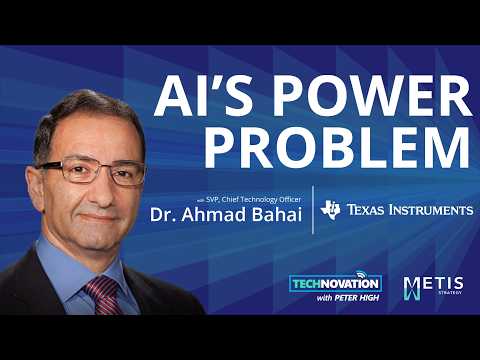
No Innovation Without a Market: Ahmad Bahai on TI's R&D Model | Technovation 1130
Semiconductor development cycles run a decade or longer, but markets shift faster than any company can predict. Ahmad Bahai, Senior Vice President and Chief Technology Officer at Texas Instruments, explains how TI navigates that gap by betting on directional technology vectors rather than specific end markets. TI's high-voltage program, started over a decade ago with smart grid in mind, eventually served electric vehicles and then became core infrastructure for AI data centers. In this episode of Technovation, Peter High speaks with Ahmad Bahai, SVP and CTO at Texas Instruments, about long-horizon R&D, the power delivery bottleneck in AI infrastructure, and why transistor scaling is now one of several co-equal innovation vectors. Bahai also reflects on the Bell Labs model, TI's $60B-plus US fab expansion, and the case for a "virtual Bell Labs" that bridges academic curiosity and commercial urgency. 🎧 An audio-only version of this interview is available as episode 1130 of Metis Strategy’s podcast, #Technovation with Peter High. 🌍 Learn more: https://www.metisstrategy.com/interview/dr-ahmad-bahai/ 📱 Follow us on social: 🔹 LinkedIn: https://www.linkedin.com/company/metis-strategy/ 🔹 Twitter/X: https://twitter.com/MetisStrategy 🔹 Facebook: https://www.facebook.com/technovationpodcast/ 🔹 Instagram: https://www.instagram.com/technovationwithpeterhigh/
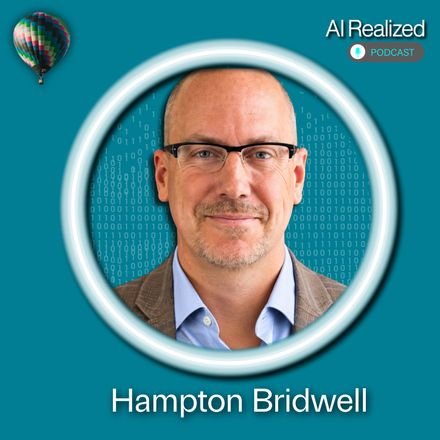 AI Realized Podcast·Nov 5
#51 AI Turns Brand Valuation Into a Quarterly Management System w/Hampton Bridwell
Hampton Bridwell, co-founder of CorebrandAI and CEO of Tenet Partners, explains how AI turns brand valuation from an annual report into a management system leaders use every quarter. He breaks down the four valuation methods behind the platform, why the valuation engine stays deterministic while AI generates the insights built on it, and why every member of the C-suite drives brand value.
 AI in Business Podcast·Nov 4
How to Make AI-Translated Content Convert in Every Market - with Andrew Thomas of Acclaro
Translating content into every language a company serves has become fast and inexpensive, but accurate translation does not ensure that content engages or converts in each market. In this episode, Andrew Thomas, Head of Marketing at Acclaro, explains why global content performance is a governance issue rather than a translation issue, and why leaders should judge localized content by the business outcome it was created to drive. He also covers testing new markets with AI-translated content before investing in local teams, building brand style guides and terminology into AI translation tools to curb shadow localization, and using automated quality checks to decide when an in-country expert needs to review content. This episode is sponsored by Acclaro AI can help you reach new markets faster, but how do you connect that investment to business results? For a broader perspective on planning your AI investments, download our free PDF report, 'Beginning with AI,' at emerj.com/aik1
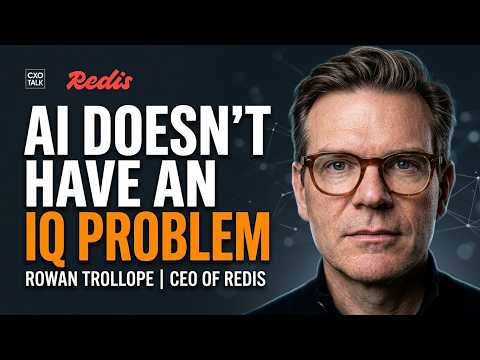
Redis CEO: AI Agents Need Context, Not Raw Intelligence
Moving AI agents from pilot to production depends less on model intelligence than on the business context and data the agents are given. Rowan Trollope, CEO of Redis, which supplies real-time data, context, and memory to AI agents, explains to CXOTalk host Michael Krigsman why agents fail on edge cases and what it takes to test, govern, and run them in production. He also covers how leaders can measure the value of AI spending and why CEOs must learn the technology hands-on. YOU’LL DISCOVER ✅ Why agents fail on edge cases, such as a discount policy that sits in a Slack channel or an email ✅ Why a smarter model does not, on its own, know how to handle a refund request from a VIP customer ✅ Why loading every company document into a model doesn’t solve the context problem, and how agents use tools to find what each task needs ✅ Why pricing and discount decisions still rely on human judgment ✅ What companies with agents in production do first: evaluations, quality tracking over time, and traces that explain each decision ✅ Why infrastructure built for people must be redesigned for agents that never sleep and can launch a thousand processes at once ✅ Why agent security looks like employee security, and why security teams must use AI against attackers who now have powerful models ✅ How two or three top-down initiatives, such as know-your-customer and anti-money laundering work at banks, make AI value measurable ⏱️ TIMESTAMPS 0:00 Introduction 0:19 Agents fail at the edge cases 1:17 Turning tokens back into business value 2:00 Context, not intelligence, limits agents 4:47 Pricing still depends on human judgment 7:01 Memory and communication for agent fleets 9:08 Evals and governance get agents into production 12:28 Agent workloads outgrow human-scale infrastructure 17:08 Agents need guardrails, just like employees 19:07 Pick a few top-down AI initiatives 20:51 Leaders must learn AI hands-on Join us live and ask the guests your own questions: https://www.cxotalk.com/subscribe Subscribe to CXOTalk for weekly conversations with senior business and technology leaders. Show notes, transcript, and summary: https://www.cxotalk.com/episode/redis-ceo-ai-agents-from-pilot-to-production Recorded October 2, 2026 #CXOTalk #AIAgents #AgenticAI #EnterpriseAI #Redis #AIGovernance #CIO #CEO #AIStrategy

AI Vendors Price Products On Purpose. Here's How to Decode It
AI vendors price their products in credits and units that no two products measure the same way, and buyers often pay for more than they understand. Kyler Cheatham, Co-Founder and Chief Performance Officer of The Confluencial, a buyer's advocate for enterprise technology purchases, explains how CIOs can decode AI pricing, test vendor demos against their own systems, and write contracts that protect the business. ✅ Why every vendor's AI currency, from Microsoft Copilot to Workday flex credits, makes products impossible to compare, and why she thinks that confusion is intentional. ✅ Whether passing variable token costs on to customers is fair, and why she says it is, but not at the margins vendors charge today. ✅ Who should own requirements before the first AI vendor meeting: IT working with the business, never an outside consultancy or the vendor. ✅ How she answers a salesperson who calls a higher price "the new way we do things": the buyer's way is to be profitable and to know exactly what it wants. ✅ Why vendor demos run on a golden path with perfect data, and why buyers should demand demo scripts in their own environment and speak with real customers. ✅ Why hiring a big consultancy or integrator is not the low-risk choice it seems, especially when that firm owns your custom integrations. ✅ How her firm's review of a 25-year vendor relationship, whose MSA nobody could find, turned up 20% yearly maintenance increases against a 6% contractual cap that turnover had left both sides unaware of. ✅ What to tell a board member who wants AI right away: a business case that follows the money. ⏱️ TIMESTAMPS 0:00 Introduction 0:24 AI vendors make pricing confusing on purpose 4:46 AI buzzwords are no substitute for strategy 11:01 Buyers absorb AI costs they don't understand 15:45 Decode AI usage pricing into real dollars 20:01 Demos hide the mess of legacy systems 29:57 Big consultancies are not a safe bet 34:49 You are responsible for what you buy 37:21 Keep vendor relationships, but verify value 43:44 AI on top won't fix legacy systems 49:12 Pay for quality and build selectively 51:58 Stress test the messiness, pull the contracts CXOTalk streams live with audience questions. Join us live and ask the guests your own questions: https://www.cxotalk.com/subscribe Subscribe for weekly conversations with leading business and technology leaders. Get the CXOTalk newsletter: https://newsletter.cxotalk.com Show notes, transcript, and summary: https://www.cxotalk.com/episode/truth-not-hype-how-cios-can-survive-ai-vendors Episode 935 | Recorded October 30, 2026 #CXOTalk #EnterpriseAI #AIVendors #CIO #AIPricing #VendorManagement #ITLeadership #SoftwareContracts #DigitalTransformation
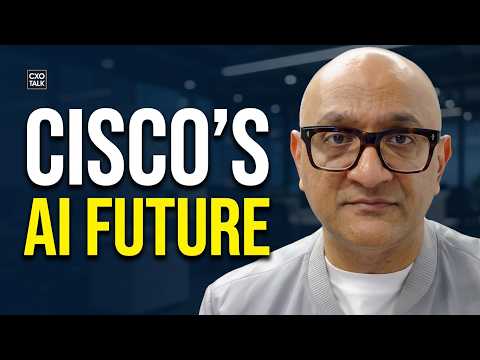
Cisco's President: "Agentic AI Will Write Our Code"
Agentic AI transformation means rethinking every workflow through the lens of AI agents. Jeetu Patel, President and Chief Product Officer of Cisco, explains how he budgets tokens across his team, why every agent action should map back to an accountable person, why teams will be measured on the quality of their evals, and why trust decides how much work agents get. He also covers how the CIO role changes and the skills engineers need now. Key points: ✅ Why he gave his teams unlimited tokens for the first four to six months, and why every manager on his team is now getting a token budget beside the headcount budget. ✅ How a tokenomics application shows which agents use what, flags anomalies, and lets a manager pull the kill switch on a runaway agent. ✅ Why using more tokens is a fact, not a measure of success, and how routing work to open weight models, sometimes run locally, balances the cost. ✅ Why he expects to need more engineers, not fewer, even as agents write most code over the next two to three years. ✅ How human provenance maps every agent action back to the person accountable for it, and why teams will be measured on their evals as much as on their product ideas. ✅ How he gets the truth: a weekly one-letter grade by text from customers who had an escalation or were unhappy, and the weekly grade from Cisco's own IT team, which stress-tests the products Cisco builds. ✅ Why trust limits agent adoption, and what just-in-time, just-enough permission means for agents. ✅ How agents shopping on behalf of consumers could shift business models, and why that puts the CIO in a strategic seat. ⏱️ TIMESTAMPS 0:00 Every workflow gets rethought with agents 6:08 Team leaders should own token budgets 11:51 Token efficiency beats token volume 16:25 Teams will be measured on their evals 22:32 Leaders need truth, not flattery 28:49 Ask customers for a letter grade 31:52 Human judgment cannot be fully delegated 34:18 Trusting agents takes guardrails and accountable humans 40:10 Preparing the next generation for agents 46:17 Product skills for agent-heavy teams 49:49 How agents change CIO and engineer roles CXOTalk streams live with audience questions. Join us live and ask the guests your own questions: https://www.cxotalk.com/subscribe Show notes, transcript, and summary: https://www.cxotalk.com/episode/cisco-president-what-makes-agentic-transformation-work Episode 934 | Recorded October 23, 2026 #CXOTalk #AgenticAI #AIAgents #Cisco #EnterpriseAI #AIGovernance #CIO #AIStrategy #DigitalTransformation
 AI in Business Podcast·Nov 3
What It Actually Takes to Trust an AI System Running on Its Own - with Yogesh Bhagat of CVS Health
Customer-facing AI agents often stall between pilot and production, held back by governance overhead and run costs that break the business case. In this episode, Yogesh Bhagat, Vice President of Digital and Technology at CVS Health, explains how autonomous agents earn the right to operate without human oversight by proving consistent, measurable behavior. He discusses validating a shared development platform instead of every agent, pairing small language models with larger judge models to control cost and latency, and giving a small group of customers the full AI experience before optimizing for containment. Learn the exact strategies we use to help leading AI brands and startups connect with their ideal enterprise AI buyers, visit: emerj.com/AD1

Data from Thousands of Tests: How Simpson Strong-Tie Is Building an AI Moat | Technovation 1129
A 70-year-old manufacturer's proprietary test data may be a more defensible AI moat than software capability alone. In this episode of Technovation, Peter High speaks with Udit Mehta, Chief Technology Officer at Simpson Strong-Tie, about building an AI strategy on a foundation of structural engineering expertise. Mehta joined in 2024 from Carrier and Siemens, and has spent two years modernizing the company's infrastructure, upskilling 1,200-plus employees on AI, and launching an integrated cloud-native software portfolio for component manufacturers. He describes how Simpson's combination of hardware, software, services, and proprietary test data creates a position pure-play software entrants cannot match, and why AI must augment engineering judgment rather than replace it. 🎧 An audio-only version of this interview is available as episode 1129 of Metis Strategy’s podcast, #Technovation with Peter High. This episode is sponsored by Blitzy. Learn more at https://blitzy.com 🌍 Learn more: https://www.metisstrategy.com/interview/udit-mehta/ 📱 Follow us on social: 🔹 LinkedIn: https://www.linkedin.com/company/metis-strategy/ 🔹 Twitter/X: https://twitter.com/MetisStrategy 🔹 Facebook: https://www.facebook.com/technovationpodcast/ 🔹 Instagram: https://www.instagram.com/technovationwithpeterhigh/
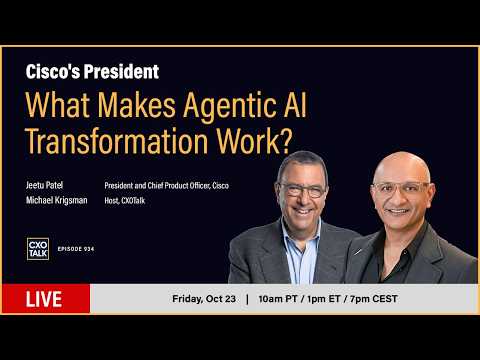
Truth, Not Hype: How CIOs Can Survive AI Vendors
Companies buy enterprise AI products with complex pricing and hype-ridden sales pitches that promise quick results. We explore vendor pitches, cut through the hype, and discuss how to structure vendor relationships and avoid lock-in.

Truth, Not Hype: How CIOs Can Survive AI Vendors
Companies buy enterprise AI products with complex pricing and hype-ridden sales pitches that promise quick results. We explore vendor pitches, cut through the hype, and discuss how to structure vendor relationships and avoid lock-in.
 AI in Business Podcast·Oct 29
From Operational Insight to Agentic Industrial AI - with Vaibhav Kumar of IFS
Retiring workers can take operational knowledge with them, while difficult-to-use enterprise systems leave other information underused. In this episode, Vaibhav Kumar, Global Chief Technology Officer at IFS, joins Emerj's Eysan Yazici to examine how conversational AI could help industrial teams capture knowledge and access business information more directly. He discusses reducing friction in enterprise software, letting users determine when agents require human involvement, and building AI literacy around systems containing meaningful business data. This episode is sponsored by IFS. Learn how leading organizations approach AI investment more like a venture portfolio, and why interdisciplinary collaboration is critical to defining the right data for AI success. Download our free PDF report, "Beginning with AI," at emerj.com/aik1

Not Just More Pilots: Shweta Gummidipudi on Scaling AI at Twilio | Technovation 1128
Most companies can prove an AI use case works. Scaling it is where they stall. Shweta Gummidipudi, CIO at Twilio, has spent her first year building the infrastructure layer that makes scale possible: a single model gateway for routing and cost control, a shared library of agents and connectors, and inference budgets that keep business-unit builds inside enterprise guardrails. She also addresses two problems most governance conversations skip: agentic identity, which the industry has not solved, and agent sprawl, which she maps directly to the shadow IT problem CIOs spent the last decade managing. Alongside those structural challenges, she describes Twilio's Customer Zero program, where IT runs Twilio's own products in live workflows and converts that experience into reference architectures that enterprise customers adopt faster than vendor documentation alone. 🎧 An audio-only version of this interview is available as episode 1128 of Metis Strategy’s podcast, #Technovation with Peter High. 🌍 Learn more: https://www.metisstrategy.com/interview/shweta-gummidipudi/ 📱 Follow us on social: 🔹 LinkedIn: https://www.linkedin.com/company/metis-strategy/ 🔹 Twitter/X: https://twitter.com/MetisStrategy 🔹 Facebook: https://www.facebook.com/technovationpodcast/ 🔹 Instagram: https://www.instagram.com/technovationwithpeterhigh/
 AI in Business Podcast·Oct 29
Inside the Performance Constraints of Modern AI Workflows - with Cameron Bahar of Everpure
GPU clusters sit idle and budgets balloon when storage can't keep pace with how fast AI workloads are scaling. In this episode, Cameron Bahar, GM of Scale AI at Everpure, explores how storage architecture must shift from rigid, single-purpose systems to flexible, cloud-like models built for constant change. The conversation covers the move from training to inference and agentic workloads, the case for separating metadata from data scaling, and what always-on, multi-tenant infrastructure looks like in practice. This episode is sponsored by Everpure. Emerj works with a select group of AI vendors to reach Fortune 500 decision makers through research, media, and direct access. If you want to be considered, download our media kit at http://emerj.com/AD1
 AI in Business Podcast·Oct 28
How Security Leaders Are Responding to Machine Speed Threats - with Sridhar Boddula of MassMutual
The cost and skill required to mount a serious cyberattack have collapsed, and most enterprise security programs still test on a quarterly or annual clock. In this episode, Sridhar Boddula, Head of Security Platform Engineering at MassMutual, breaks down why that mismatch is now the central risk for regulated enterprises and what has to change inside a security team to close it. He covers shifting from periodic testing to continuous validation, moving security from a gatekeeping function into the engineering pipeline, and the governance-first first step leaders should take before scaling any new tooling. This episode is sponsored by XBOW. To learn how leading brands and AI startups connect with enterprise AI buyer audiences at scale, download our media kit at emerj.com/AD1
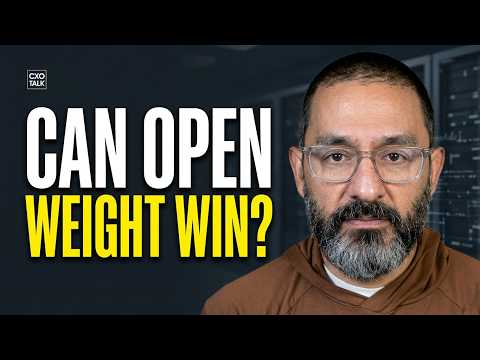
Can Open Weight AI Compete with Frontier? Mozilla CTO Raffi Krikorian explains.
Companies running AI must decide which work to send to the frontier labs and which to run on open-weight models. Raffi Krikorian, Mozilla's Chief Technology Officer, explains open-weight AI for the enterprise: what open-weight and open-source models are, which work belongs on frontier models, and when running your own models pays off. The conversation covers cost, security, backup plans, token pricing, and lock-in. ✅ Why Raffi compares an open-weight model to a compiled binary: you can download and run it, but you cannot see what went into it, unlike a fully open-source model. ✅ Where to draw the line: frontier models for scientific research, open-weight models for everyday tasks at about 35 to 50 times lower cost. ✅ How to find your own line: record and log every prompt and response, so those traces show which work a cheaper model can handle. ✅ Why openness leads to more security, not less, with Signal as the example. ✅ Why Raffi expects the moat to shift from building models to using them: fine-tuning, deployment, and the tooling around the model. ✅ How to run open models today, from NeoCloud API providers to Ollama, vLLM and llamafile on a MacBook, Mac Studio or DGX Spark, and why RAM is king. ✅ Why Raffi tells CTOs not to switch providers today, but to start evaluating a backup plan for outages, cost spikes, and lowered token limits. ✅ Why today's token prices are subsidized ahead of the labs' IPOs: a $200 subscription that one Mozilla engineer measured at about $6,000 a month in tokens. ⏱️ TIMESTAMPS 0:00 Introduction 0:14 Open weight versus open source models 5:11 Rent the frontier, own everyday AI 12:21 Openness leads to more security, not less 14:45 The moat shifts from model to usage 18:28 Open models are getting easier to run 27:42 Start evaluating a model backup plan today 32:51 When enterprises should move to open models 38:51 Subsidized token prices will not last 43:13 IP rights and inspection at scale 47:00 Open-weight competition, China, and safety 51:08 Token price hikes and context lock-in CXOTalk streams live with audience questions. Join us live and ask the guests your own questions: https://www.cxotalk.com/subscribe Show notes, transcript, and summary: https://www.cxotalk.com/episode/mozilla-cto-open-source-and-open-weight-ai-rent-or-own Episode 933 | Recorded October 9, 2026 #CXOTalk #OpenWeightAI #OpenSourceAI #EnterpriseAI #AIStrategy #Mozilla #OpenModels #AICosts #CTO #AIInfrastructure
 AI in Business Podcast·Oct 27
Measuring Marketing When AI Makes the Click Disappear - with Gillian Hinkle of Salesforce
AI-generated answers can give buyers information without a website visit, complicating how marketing teams measure visibility and conversion. In this episode, Gillian Hinkle, Senior Director of Marketing – Demand Gen, ABM, & Growth at Salesforce, joins Emerj's Matthew DeMello to examine how teams can adapt their content and measurement practices. She discusses evaluating content for traditional search and AI-generated answers, tracking conversion by topic, and aligning website messaging with public relations and analyst coverage. Learn how to identify real AI trends by tracking where venture funding is flowing and listening to how leading CEOs describe risk and competitive strategy. Download our free PDF report, "3 Ways to Discover AI Trends in Any Sector," at emerj.com/ait
 Me, Myself, and AI·Oct 27
See, Think, Act, and Learn With AI: Honeywell Technologies’s Suresh Venkatarayalu
What happens when artificial intelligence starts making decisions in the physical world? Honeywell Technologies CTO Suresh Venkatarayalu joins us to explain the company’s shift from automation to autonomy. He breaks autonomy into four stages: see, think, act, and learn, and explains why AI in the physical world requires a different approach to trust, guardrails, and human oversight. The conversation explores how combining decades of industrial knowledge with AI could create systems that continuously learn, anticipate problems, and help people make better decisions. Guest Bio: At Honeywell Technologies, Suresh Venkatarayalu is senior vice president and chief technology officer, and he is president of Honeywell Connected Enterprise. His principal focus is helping customers transform and automate their operations at scale. Venkatarayalu leads Honeywell’s global technology strategy, connected solutions, and software business. As CTO, Venkatarayalu sets Honeywell’s enterprise-wide research and development agenda, advancing breakthrough technologies, shaping the company’s AI and autonomy strategy, and defining the road map for its automation portfolio and path to industrial autonomy. As president of Honeywell Connected Enterprise, he oversees the full software life cycle, including product management and engineering, the company’s labs and operations, and Honeywell Forge, which serves as a key enabler of the company’s vision to help the industrial world transition from automation to autonomy. Me, Myself, and AI is a podcast produced by MIT Sloan Management Review and hosted by Sam Ransbotham. It is engineered by David Lishansky and produced by Allison Ryder. We encourage you to rate and review our show. Your comments may be used in Me, Myself, and AI materials.
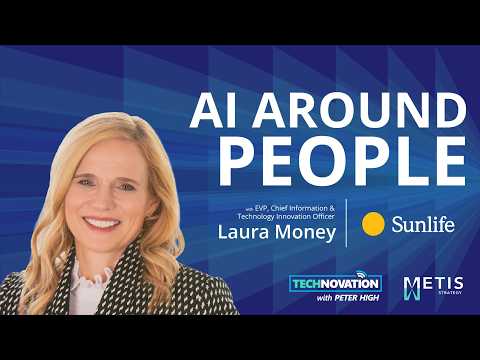
Sunlife's Laura Money on Designing AI Around People | Technovation 1127
AI efficiency is not the destination. At Sunlife, it is the means to something harder to automate: meaningful human connection. In this episode of Technovation, Peter High speaks with Laura Money, Executive Vice President and Chief Information and Technology Innovation Officer at Sunlife, about building AI around people rather than processes. Money joined Sunlife in 2020 with a mandate to connect technology strategy directly to business strategy. She describes a four-year AI adoption journey, from an internal GenAI chatbot in early 2023 to agentic systems governed by a shared control plane built with banking and telecom peers. Her core argument: adoption, not technology, is the real bottleneck, and AI's value in financial services depends on what it frees people to do, not what it replaces. 🎧 An audio-only version of this interview is available as episode 1127 of Metis Strategy’s podcast, #Technovation with Peter High. This episode is sponsored by Tines. Learn more at https://www.tines.com/ This episode is also sponsored by Blitzy. Learn more at https://blitzy.com/ 🌍 Learn more: https://www.metisstrategy.com/interview/laura-money/ 📱 Follow us on social: 🔹 LinkedIn: https://www.linkedin.com/company/metis-strategy/ 🔹 Twitter/X: https://twitter.com/MetisStrategy 🔹 Facebook: https://www.facebook.com/technovationpodcast/ 🔹 Instagram: https://www.instagram.com/technovationwithpeterhigh/
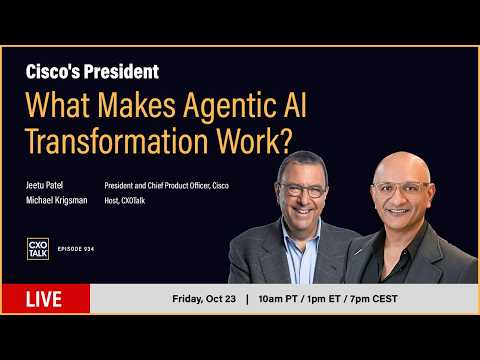
Cisco President: What Makes Agentic Transformation Work?
Large companies are assigning work to AI agents alongside their employees. Cisco’s President shares lessons from his engineering teams and offers practical advice on accountability, budgets, and leadership for executives.
Get this as a briefing
Daigest collects updates from these sources
and delivers an AI-curated briefing to your inbox daily.