Developer Trends
Trending repos, top discussions, and curated dev news from GitHub, Hacker News, Lobsters, TLDR, and Changelog.
Tracked Sources
Communities

Tracked Sources
Communities
Today's Trending Repos

 GitHub Trending·1h ago
dream-num / univer
The Office Harness for AI Agents — Spreadsheets, Docs, Slides, Canvas, Relational Tables, and PDF in one runtime.
 GitHub Trending·1h ago
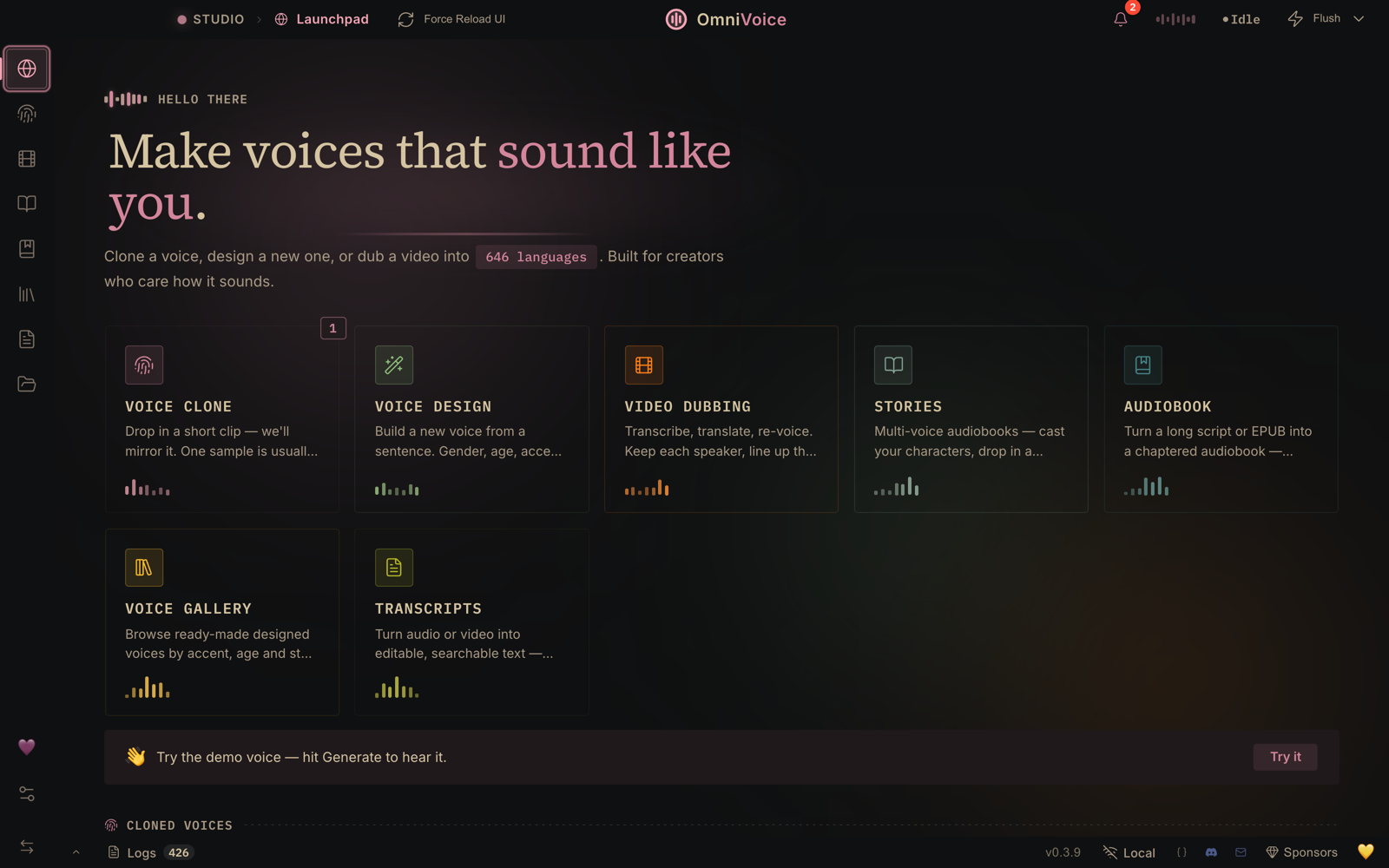
debpalash / VoiceStudio
VoiceStudio is the open-source, fully-local ElevenLabs alternative — voice cloning, voice design, video dubbing, dictation, transcription & audiobook creation in 646 languages.
 GitHub Trending·1h ago
paperclipai / paperclip
The open-source app everyone uses to manage agents at work
 GitHub Trending·1h ago
vectorize-io / hindsight
Hindsight: Agent Memory That Learns
 GitHub Trending·1h ago
NawfalMotii79 / PLFM_RADAR
Open-source, low-cost 10.5 GHz PLFM phased array RADAR system
 GitHub Trending·1h ago
cs341-illinois / coursebook
Open Source Introductory Systems Programming Textbook for the University of Illinois
 GitHub Trending·1h ago
byoungd / up
An advanced guide which might benefit you a lot 🎉 . 韩先凯的人生进阶指南 人生进阶指南 离谱的人生 人生进阶 AI学习 AI指南 韩先凯的AI学习指南 英语学习指南/英语学习教程/英语学习/学英语
 GitHub Trending·1h ago
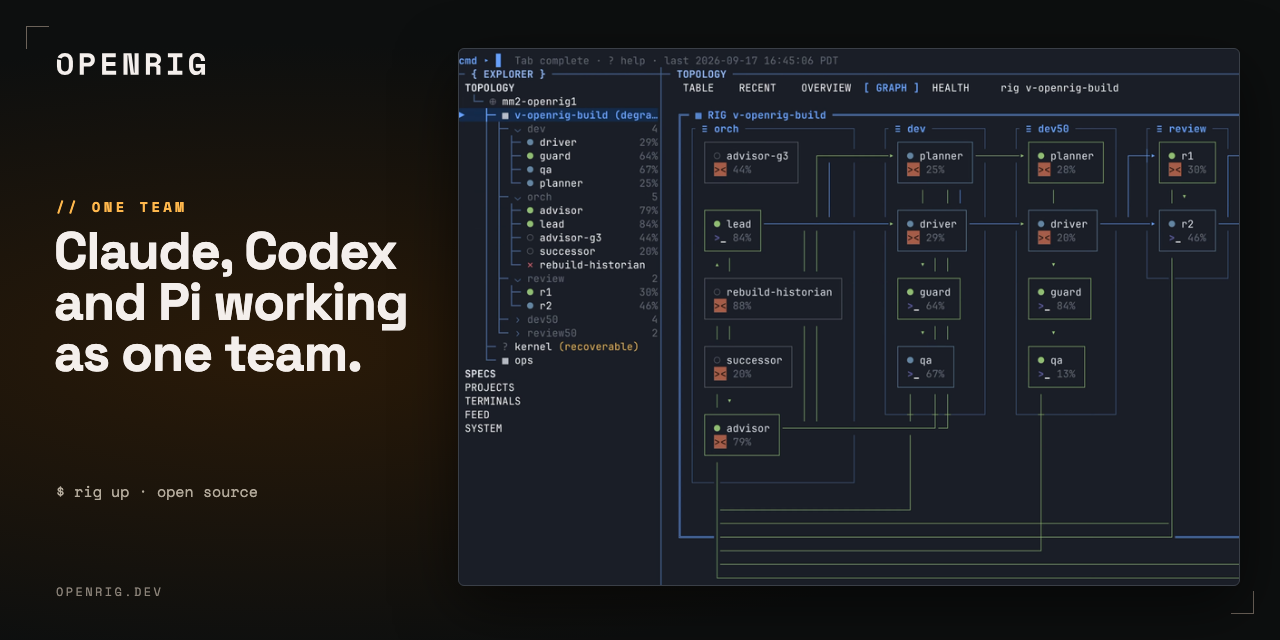
mvschwarz / openrig
Multi-agent harness that runs Claude Code and Codex together as one system
Latest Updates

 Lobsters·1h ago
Hijacking the PS5's RTMP Stream
The long way around to screen sharing.

 Hacker News·3h ago
Parley: Federated, decentralised chat that speaks plain IRC
Federated, decentralised chat that speaks plain IRC. Run your own instance for your domain; talk to anyone as user@domain from irssi or any IRC client.
 Lobsters·3h ago
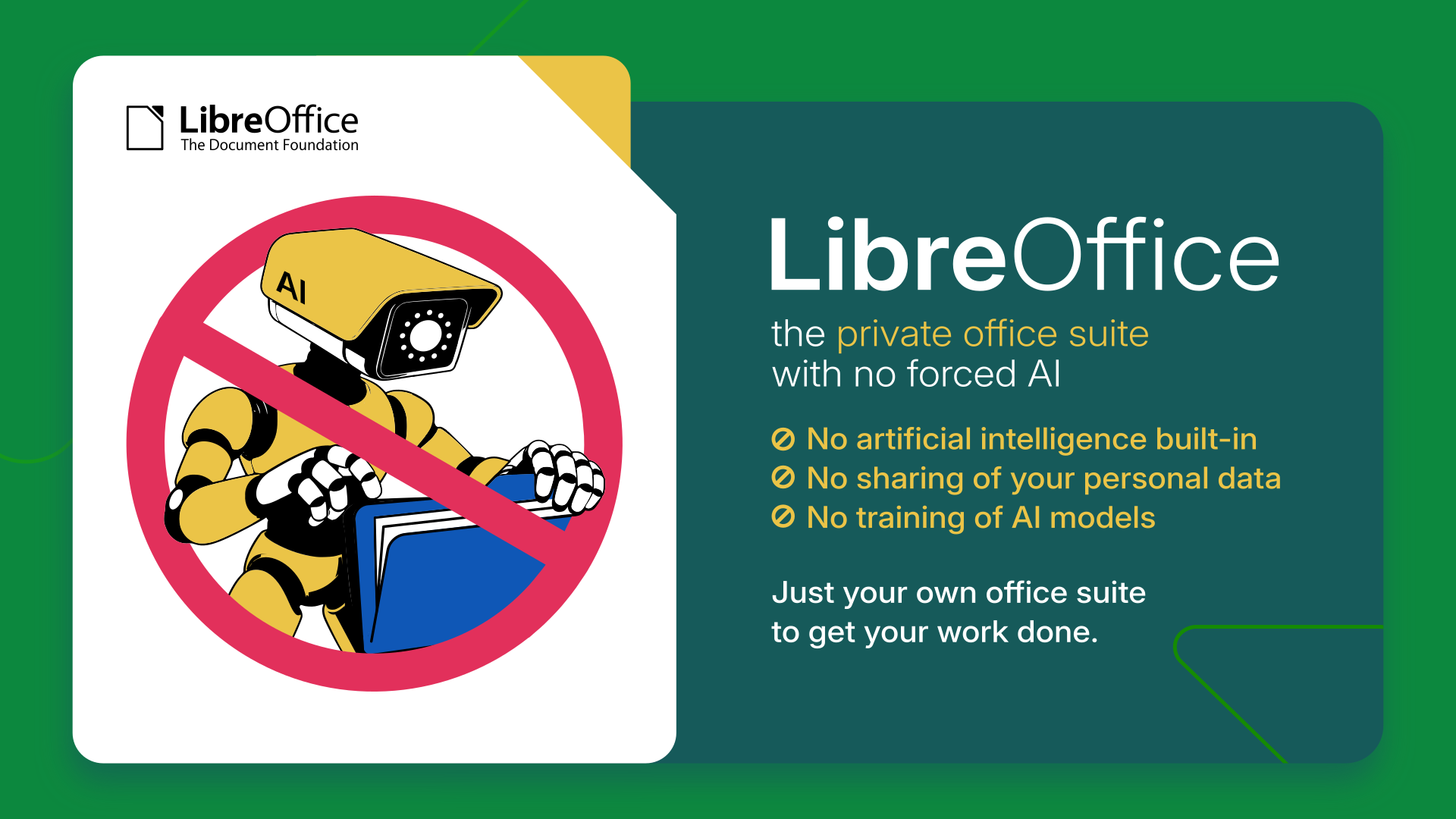
Yes, no AI is now a feature
One of the comments on the announcement of LibreOffice 26.8 was a simple question: “So, no AI is now a feature?” LibreOffice does not reject artificial intelligence out of hand, but an office suite used by tens of millions of people – in schools, hospitals, public bodies, law firms and thousands of other organisations – will not add a feature to its default configuration until that feature can be delivered under the conditions defined by the project in accordance with its principles. User-controlled execution. The user must be able to choose where inference takes place: on the local computer, on an infrastructure directly controlled by the user, or on a service chosen independently by the user. A default setting that silently redirects to a single provider is not a choice. No content may leave the computer without authorisation. The content of documents is a user’s asset and, in many implementations, is also legally protected material: medical records, case files, tender documents and student data. Transmission must be the result of a user’s decision and not behaviour carried out in the background by the application. No telemetry of any kind. LibreOffice does not collect usage data, and this must also apply
 Lobsters·3h ago
Leaving them behind
The one where I’ve seen enough (for real this time).
 Hacker News·4h ago
SpaceX's Starship launching to orbit for first time ever today
Liftoff is scheduled for Monday (Sept. 28) at 8:15 a.m. EDT (1215 GMT).
 Hacker News·5h ago
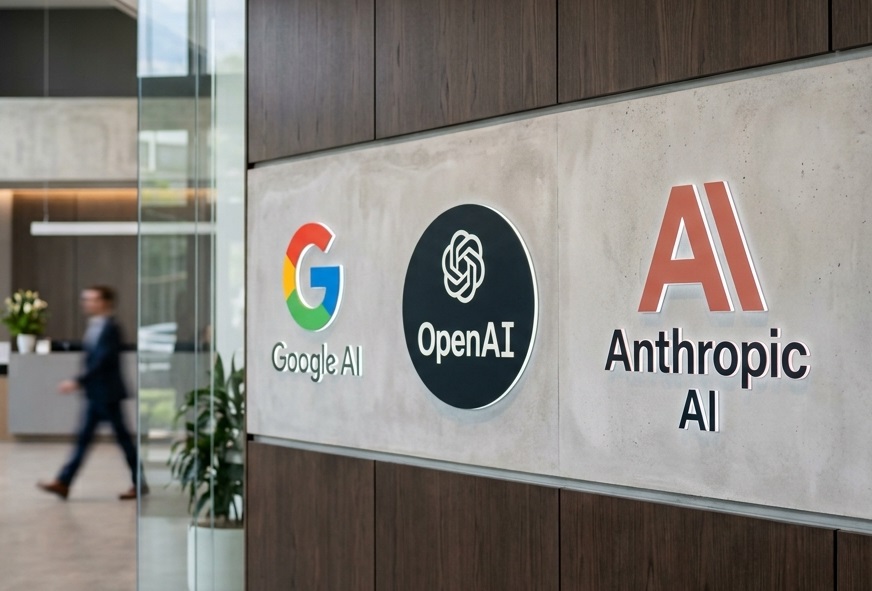
AI companies in race to demonstrate their model most threatening to humanity
In the midst of growing fears that artificial intelligence is advancing at such a rate that it may compel itself to end all life on earth, AI giants from OpenAI to Anthropic are switching up their …
Hacker News·5h ago37,500 border drawings: a map of the world as people remember it
 Lobsters·5h ago
Rickrolling with a Pharmacy cross
0 comments
 Lobsters·8h ago
What makes Lisp difficult to read?
10 comments
 Lobsters·9h ago
Fool's Expertise
I listened to the recent Ezra Klein interview with Nvidia CEO Jensen Huang, which seems to be something of a Rorschach test for AI doomerism: if you are inclined to see doom, Jensen sounds dismissive, but if you (like me) do not fear for the future of humanity at the (metaphorical!) hands of a computer program, Jensen’s responses seem very reasonable. (With some exception: does this guy really not know his own zip code?!)
 Hacker News·10h ago
Thinking fast and slow in AI: The role of metacognition (2021)
AI systems have seen dramatic advancement in recent years, bringing many applications that pervade our everyday life. However, we are still mostly seeing instances of narrow AI: many of these recent developments are typically focused on a very limited set of competencies and goals, e.g., image interpretation, natural language processing, classification, prediction, and many others. Moreover, while these successes can be accredited to improved algorithms and techniques, they are also tightly linked to the availability of huge datasets and computational power. State-of-the-art AI still lacks many capabilities that would naturally be included in a notion of (human) intelligence. We argue that a better study of the mechanisms that allow humans to have these capabilities can help us understand how to imbue AI systems with these competencies. We focus especially on D. Kahneman's theory of thinking fast and slow, and we propose a multi-agent AI architecture where incoming problems are solved by either system 1 (or "fast") agents, that react by exploiting only past experience, or by system 2 (or "slow") agents, that are deliberately activated when there is the need to reason and search for optimal solutions beyond what is expected from the system 1 agent. Both kinds of agents are supported by a model of the world, containing domain knowledge about the environment, and a model of "self", containing information about past actions of the system and solvers' skills.
 Hacker News·11h ago
Nissan's third generation e-POWER powertrain
Nissan’s Third generation e-POWER: Nissan’s various technologies, including electrification, autonomous drive, connected car & service, mobility service, and energy management, are introduced.
Hacker News·11h agoOwed a billion dollars in Nvidia stock
 Lobsters·17h ago
Don't couple your Go code to GitHub
16 comments
 Hacker News·17h ago
When did Google get so weird?
I recently had an experience while doing a simple Google search that was so profoundly weird that it stopped me in my tracks. Understanding this Google se...
 Lobsters·20h ago
postmarketOS rebrands as Nura
10 comments
 Hacker News·20h ago
Ember-1
Ember-1 is a new specialized model from Fireworks Research that delivers Kimi K3’s quality with 40% fewer tokens.
 Lobsters·22h ago
“They had no concept of a duty of care to their users.”
A blog about software craft and quality
 Lobsters·1d ago
Ten Lines Of Code That Changed My World
14 comments
 Hacker News·1d ago
Footguns with Postgres "at time zone 'UTC'"
And why you may need to repeat AT TIME ZONE 'UTC' twice. SUMMARY * AT TIME ZONE 'UTC' converts the data type from timestamptz to timestamp (example). * Now you are inadvertently using the timestamp without time zone (aka timestamp) data type, which is markedly discouraged. * There are tons of footguns with timestamp. * For example, the equality of timestamp and timestamptz will always be false. * Adding a month with + INTERVAL '1 months' is timezone-dependent. If your product

 Changelog·Sep 14
Changelog IRL @ PlanetScale (Sept 17, 2026)
Changelog is taking over PlanetScale's HQ We’re getting together IRL!! On Thursday, September 17th, Changelog is taking over PlanetScale’s HQ in San Francisco for an evening of short talks and conversations about AI, developer tools and what people are building. We’ll have a few conversations with special guests and time for questions, food, drinks and hanging out. I’ll be joined by three builders pushing this idea forward, starting with Dan Robinson from Detail (detail.dev), with more guests to be announced very soon. I also have 80 limited edition t-shirts printed to give away! This won’t be a few presentations followed by everyone heading home. We’re doing this Changelog-style: live conversations, questions from the room, drinks, and plenty of time afterward for the hallway track. If you’re in San Francisco, register to come hang out! Changelog IRL Thursday, September 17th, 2026 6:00pm – 9:00pm PDT PlanetScale HQ Speakers Dan Robinson, (Detail) Christian Glassiognon, Developer Educator at PlanetScale TBD Schedule 6:00 - 6:45pm: Doors open, food, drinks and networking 6:45 - 7:00pm: Welcome and opening chat with Adam 7:00 - 8:00pm: Changelog IRL with Dan and special guests 8:00 - 8:15pm: Questions 8:30 - 9:00pm: Hanging out and networking 9:00pm: Close All times Pacific. PlanetScale HQ, 108 Natoma St, San Francisco.
 Changelog·Sep 3
Forking Cal.com to closed source
This week I'm joined by Peer Richelsen, co-founder of Cal.com. What if the majority of open source repositories are already compromised and we just don't know it yet? That's the theory Peer brings to the table this week. We dig into how AI has flattened the knowledge graph to the point that a 16-year-old can vibe hack a power station just as easily as their mom can vibe code an iOS app, why the reporting culture that has kept open source safe all these years is collapsing under AI generated noise, Cal.com's move to fork its own codebase and take the sensitive parts private, and the eye opening reality that shipping "$1 of AI tokens for pennies on the dollar" is now a common startup business model.
Get this as a briefing
Daigest collects updates from these sources
and delivers an AI-curated briefing to your inbox daily.